

Organization

WEX
My role
Product Designer,
Corporate Payments Team
Timeline
8 Weeks (2025)
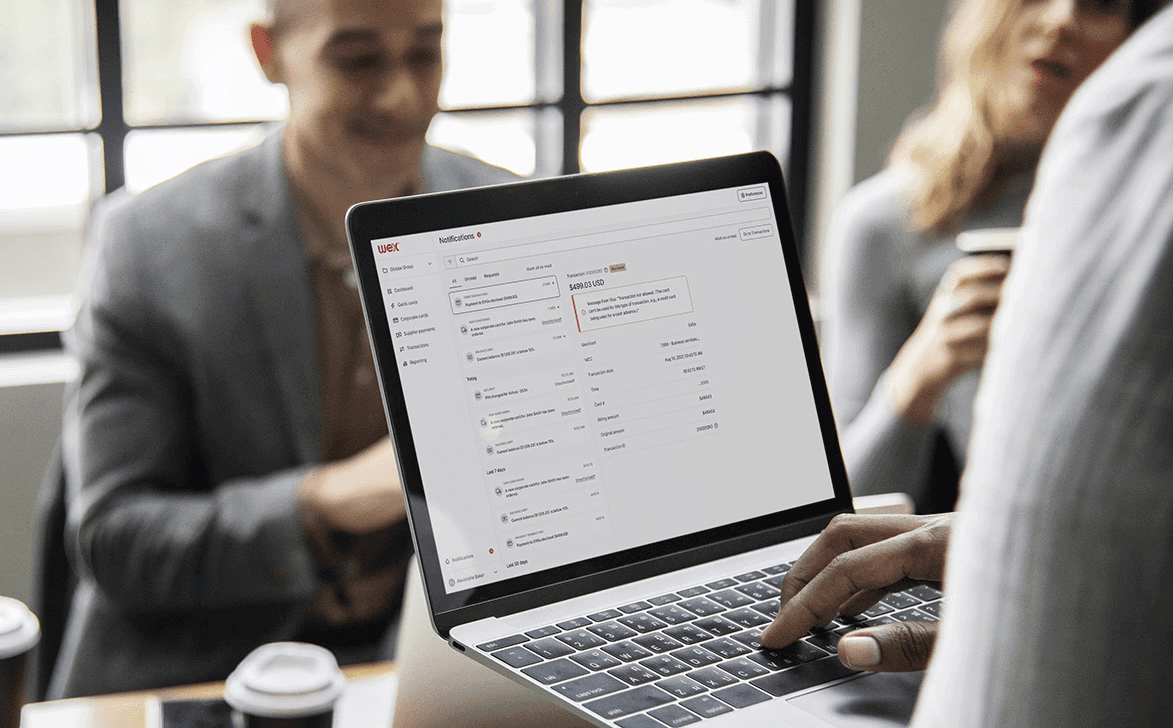
At WEX, I worked on multiple design initiatives for WEX's Corporate Payments' line of business. This particular initiative entailed designing a solution for the notifications system, serving WEX business payment customers. I primarily worked on research and design system efforts, supported by our design, research, PMs, and stakeholder teams.
DESIGN SYSTEM COMPONENTS
Notification-system components handed off with fully customizable properties.
UX WRITING DELIVERABLES
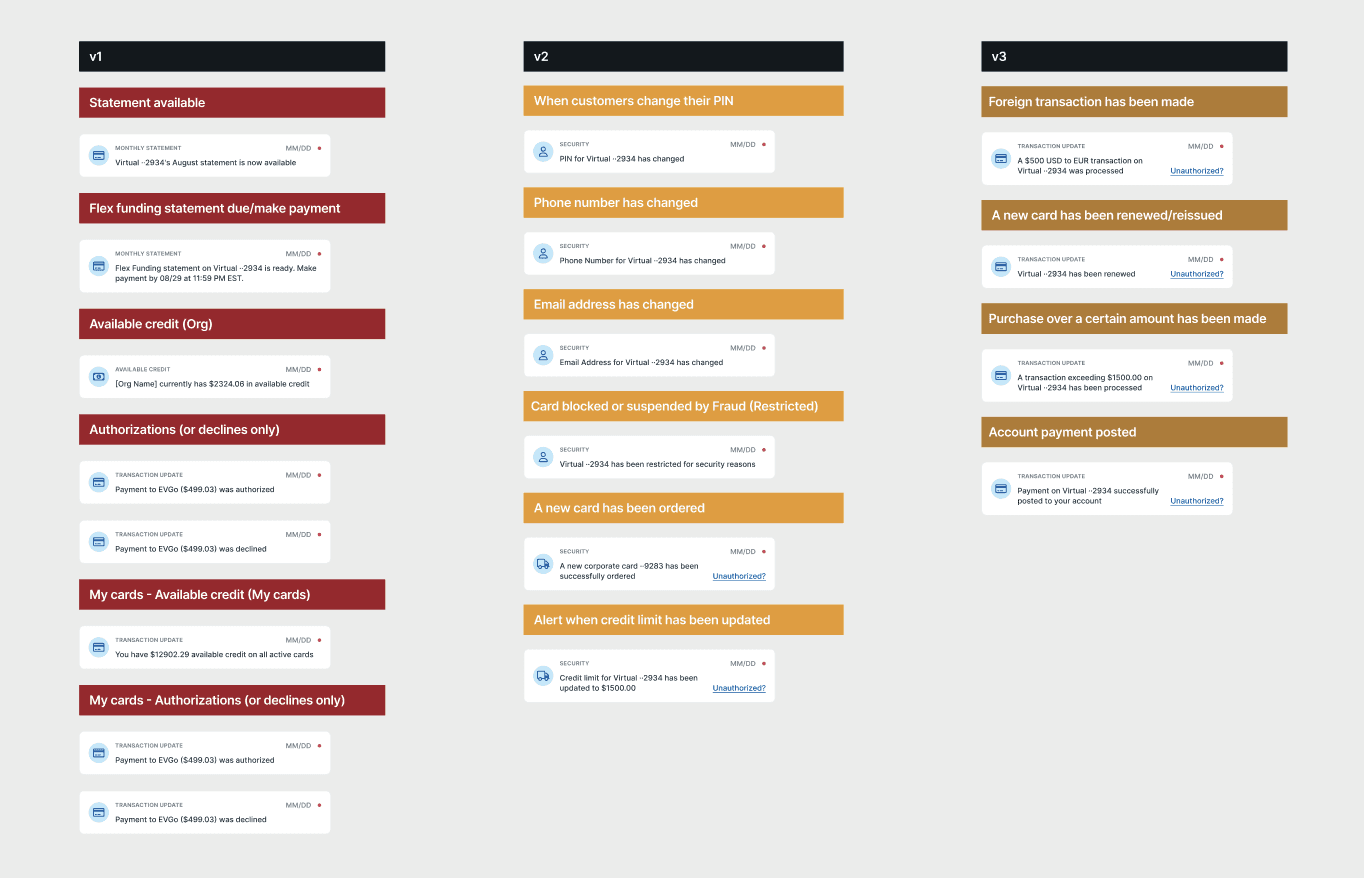
Copies handed-off for notifications and different categories of alerts.
PROTOTYPE TURN-AROUND
Weeks of moving from ideating and iterating, to prototyping in Figma.
My first product design internship!
This summer was full of amazing firsts: presenting UX work to corporate teams, learning fintech workflows, and doing rope courses with my awesome cohort.
As you read, it's worth knowing: This is my first time in fintech…
PROBLEM
Finance workers find it challenging to stay informed and take action from the current alert system because they must context switch between 2+ tabs. This left many items delayed, and our users often felt slow and inefficient.
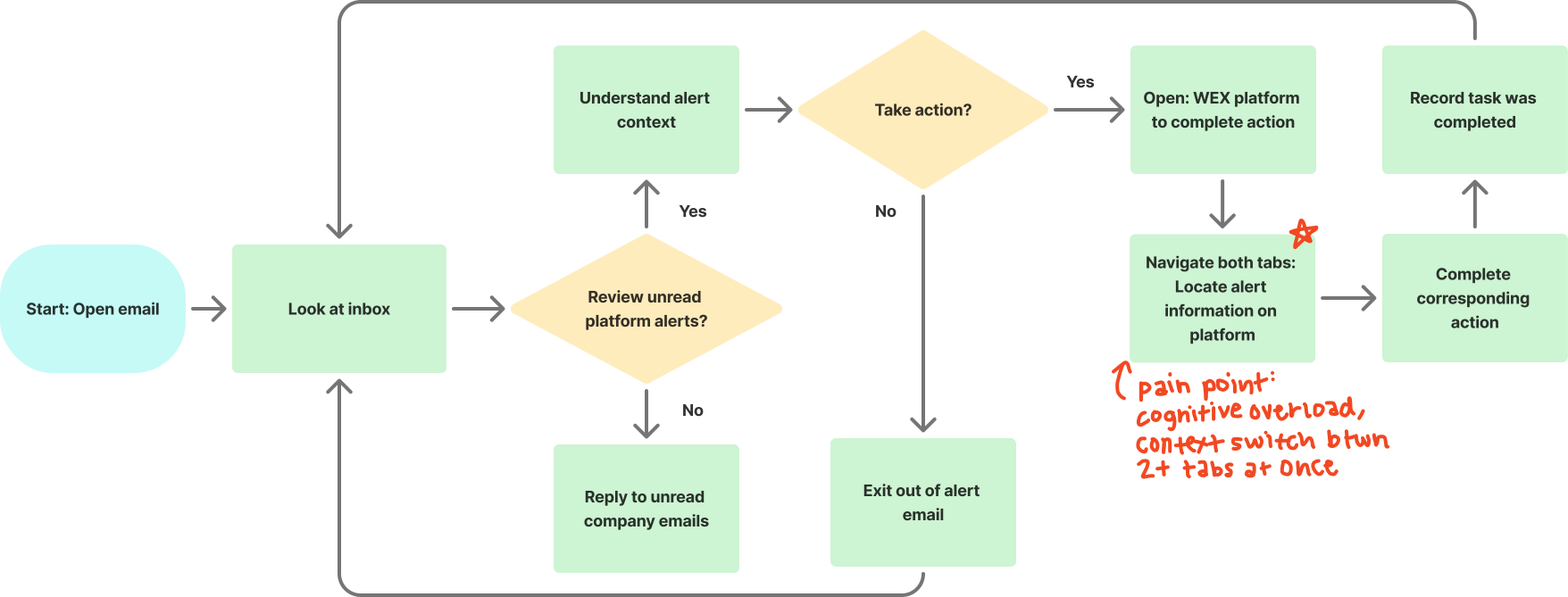
This user flow maps the process it requires to resolve financial alerts.
PROCESS
These are the steps I took to approach a fulfilling solution.
Note: This process was iterative and some steps were revisited as we adapted to evolving insights.
Initial Research/Empathize
Desk Research
Define
Prior Feedback Review
Research
User Interviews
Journey Mapping
Competitive Analysis
Ideation
Constraint Mapping
Rapid Sketching
Key Insights
Prototype/Test
Mid-fi Prototyping
Stakeholder Feedback
(Added Task) UX Writing
Content Strategy
Hi-Fi Refinement
Final Delivery

RESEARCH AND DISCOVERY
Prior user interviews and research had been conducted before I joined this project. To reopen and kickoff this project, I focused on synthesizing our existing efforts and data in order to discover improvement opportunities, current strengths, unseen pain points, and deeply understand our finance teams.
USER INTERVIEWS AND ANALYSIS
Users wanted to immediately take action and keep an usable record of older alerts.
Using Dovetail, UserTesting, and user interviews, I observed repeated complaints, successes, and behavioral patterns with users that work with our alerts daily to guide my understanding of the situation. Here, it was revealed users struggled with searching for specific alerts (like card transactions), keeping record of older alerts, and taking action.
Note: Blurred for confidentiality reasons.
USER JOURNEY MAP
While resolving a payment issue, users found locating the affected record to be frustrating and overwhelming.
Maintaining open communication with the research team, I mapped their insights onto a user journey map in order to pinpoint successes and limitations of their current workflows.
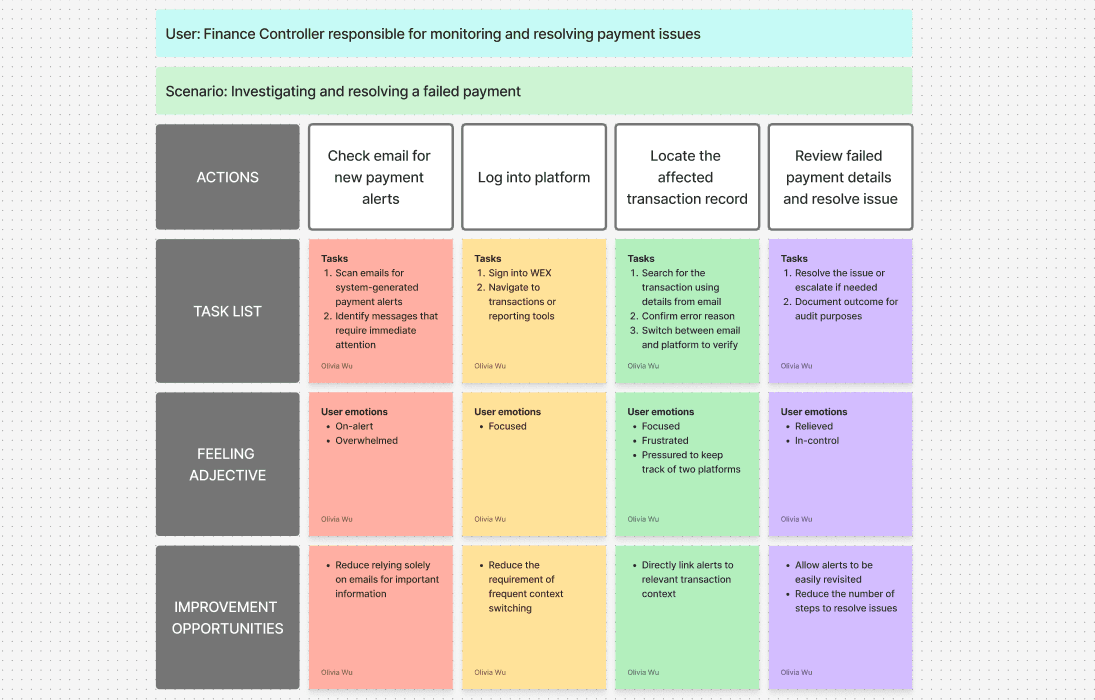
Our users experienced "frustration" and "overwhelm" primarily while checking emails and locating specific records. Currently, users found it inefficient that the workflow required users to switch platforms and locate information manually. After identifying the bottlenecks, I concluded it was important that the system allowed users to access all relevant information in one place and directly take action from the alert.
COMPETITIVE ANALYSIS
Fintech competitors prioritized immediate actionability, strong record-keeping, and efficient scanning and filtering.
Through signing up for demos and discovering patterns from fellow fintech companies, we analyzed the strengths and weaknesses of their patterns, which helped inform our ideation, visual cohesiveness, and future direction.
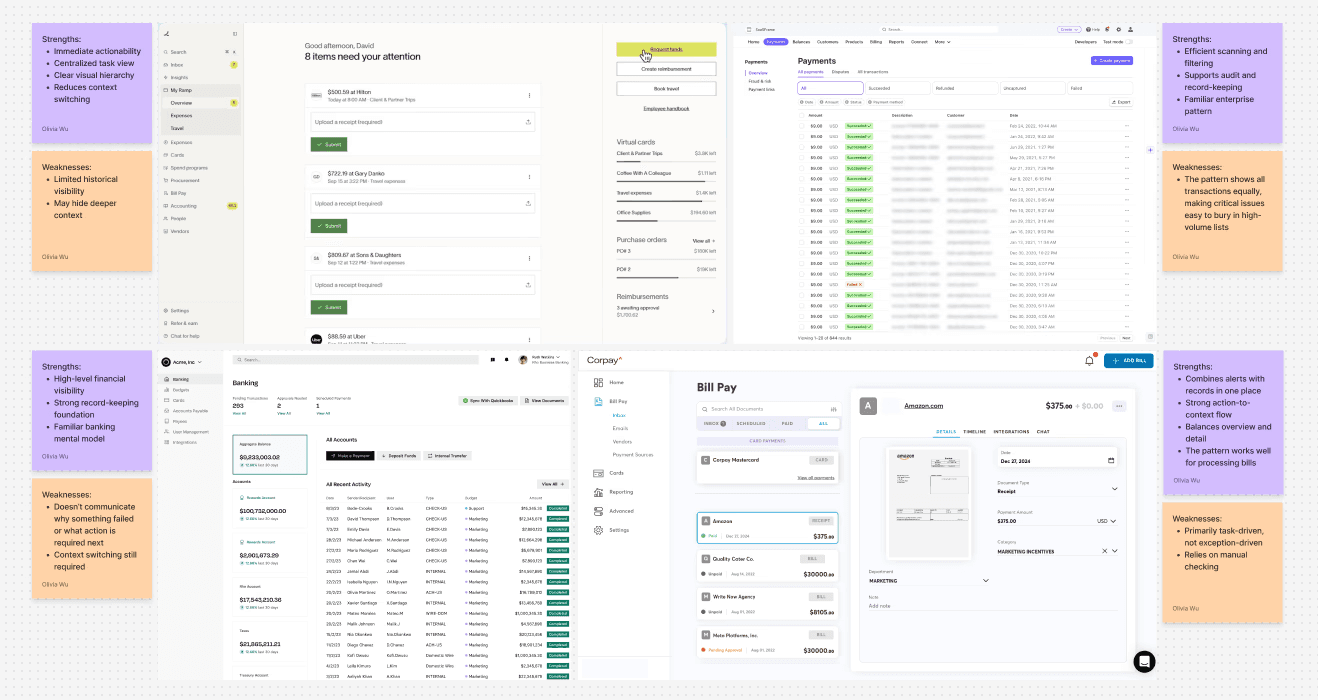
This is a preview of the competitive analysis that was done. The full analysis was SWOT-formatted and is not shown here for confidentiality reasons.

KEY INSIGHTS
The separation of "email-alerts" and "platform-actions" created cognitive overload. Workers wanted to seamlessly take action, track older alerts, and easily review issues in full context.
PAIN POINTS
"As a user, I'm frustrated that:"
PRODUCT: Important items are too easily forgotten or delayed.
Finance controllers checked emails for alerts, but had to log into the WEX platform to investigate issues
Risks: sensitive finances, delayed responses, and missed urgent items
PROCESS: Recording important information relied on controllers' DIY solutions.
Had to manually record it elsewhere for future use, no centralized place for older alerts
ACTIONABLE INSIGHTS
"As a user, I want to:"
Review issues in full details immediately
Easily take relevant action after being alerted
Conveniently track and revisit alerts

DESIGN FOCUS: USER NEEDS + GOALS + CONSTRAINTS
Creating a checklist of needs and constraints for the Phase 1 solution.
I discussed with our stakeholders and PMs what our desired outcome of this project would look like, which also accomodated longer-term future goals.
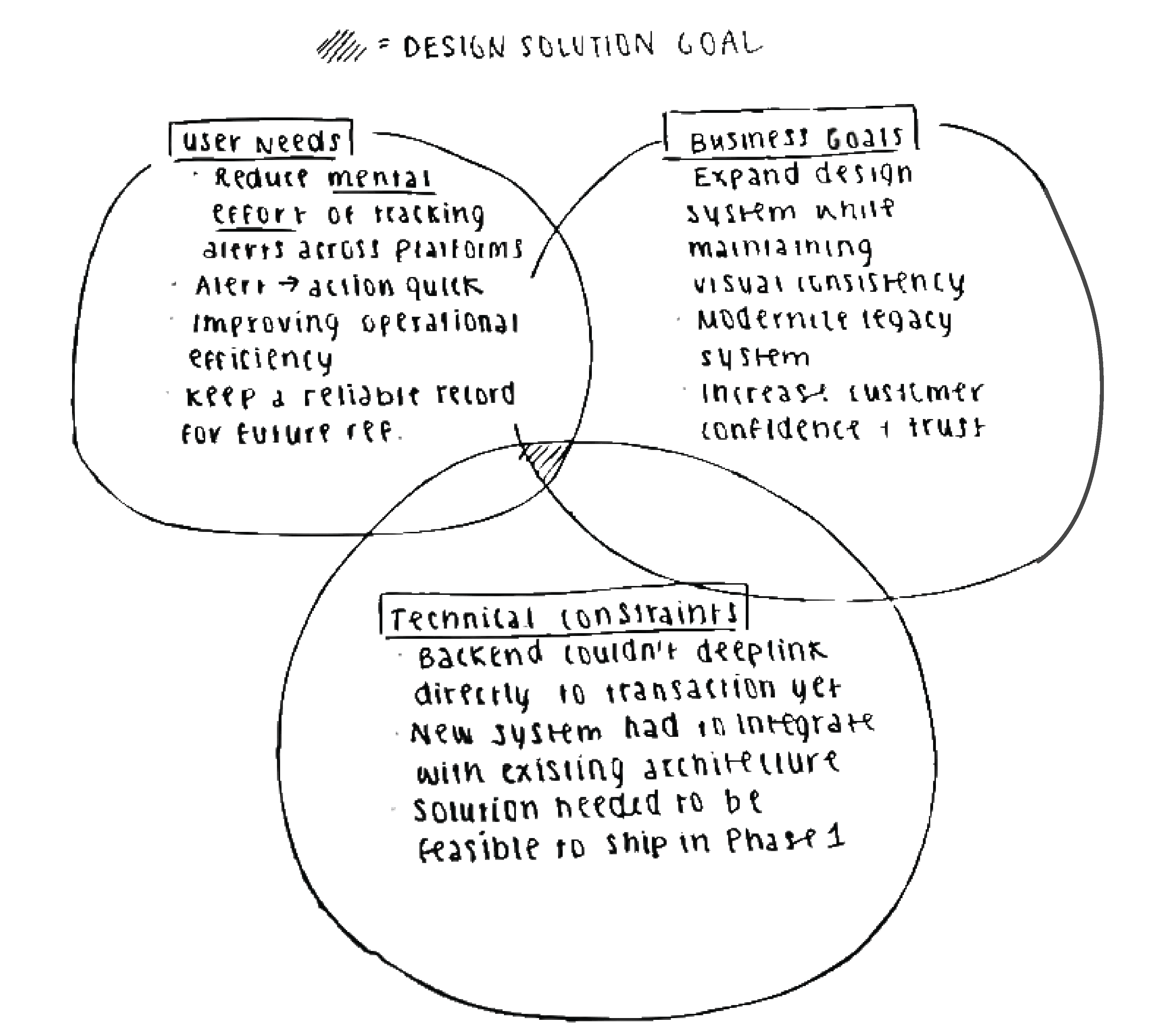
To ideate an effective design solution, it was important to see the full picture. Bringing in what I learned from our research and multiple stakeholder conversations, I carefully mapped our user needs, business goals, and technical constraints to guide my ideation.
PROBLEM + OPPORTUNITY STATEMENT
We saw an important opportunity to ease the transition between "awareness" and "taking action."



IDEATION: WIREFRAME SKETCHES
Visualizing multiple notification systems: side-panels, popover, inbox, toasts…
I set up a timer for 10-minutes and began sketching away. Once I finished, I added notes and sought feedback by discussing my thought process and expanded the conversation by applying considerations to constraints and goals.
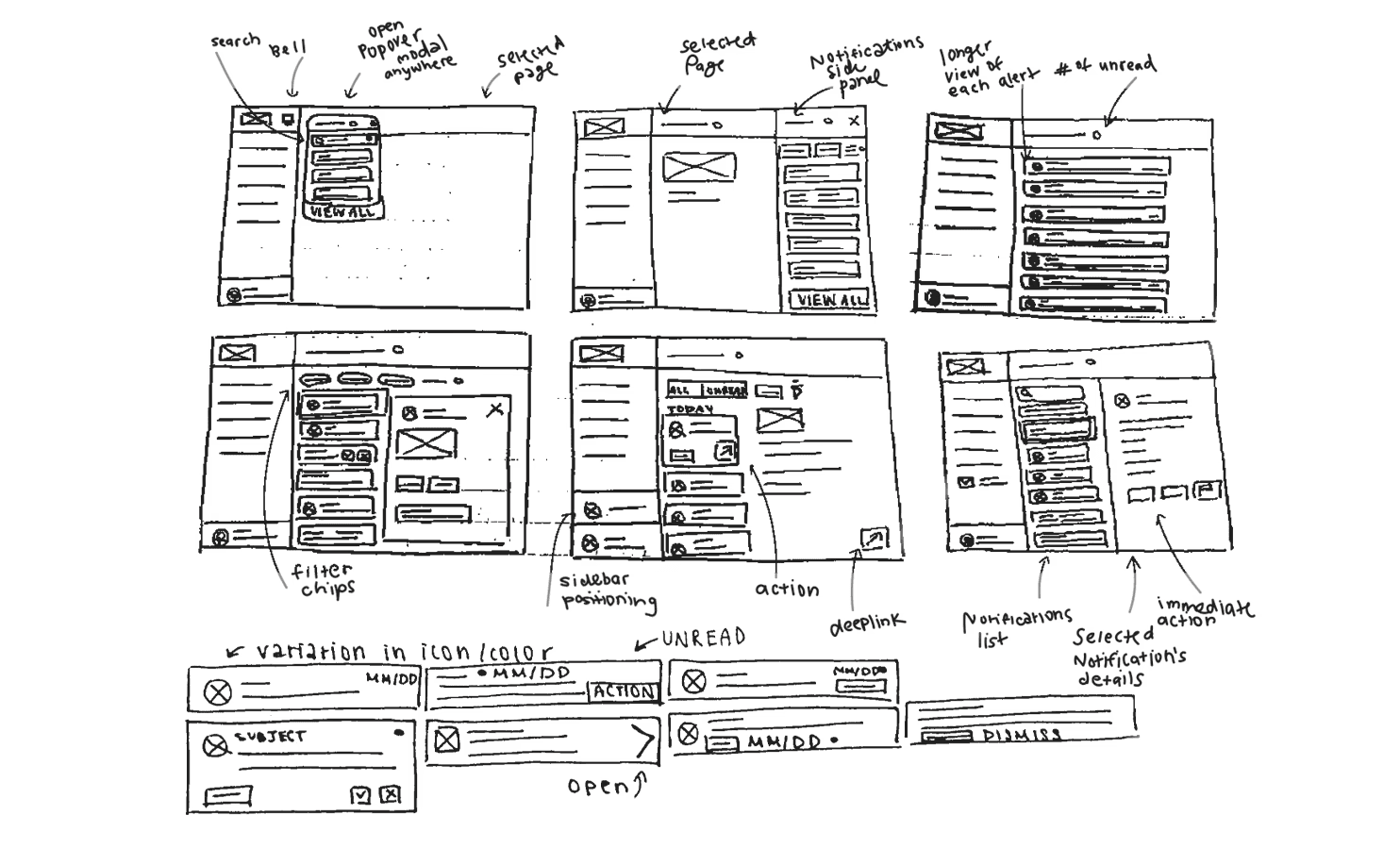
The "Inbox" idea puts alerts in one place and naturally recordkeeps. Also, its fullscreen system helps users stay on task and is familiar to our users, which eases the learning curve.
Informed by our research, I advised stakeholders that an "Inbox" addressed users' pain points regarding "context-switching" and recordkeeping. The "Inbox" also aligned with design patterns popularly used in fintech, agreeing with Jakob's law that suggests users prefer patterns they already know. (In this step, I'd typically create low-fi digital prototypes to test and validate further but there were deadline priorities that needed to be adhered to.)
PROTOTYPING: MID-FI PROTOTYPES
After aligning with the team, I refined mid-fi prototypes for the 2 different directions: "Inbox" and "Bell + Modal Popover"
As a team, we ensured open communication and checked in with one another, so that the designs remained consistent and on-track.
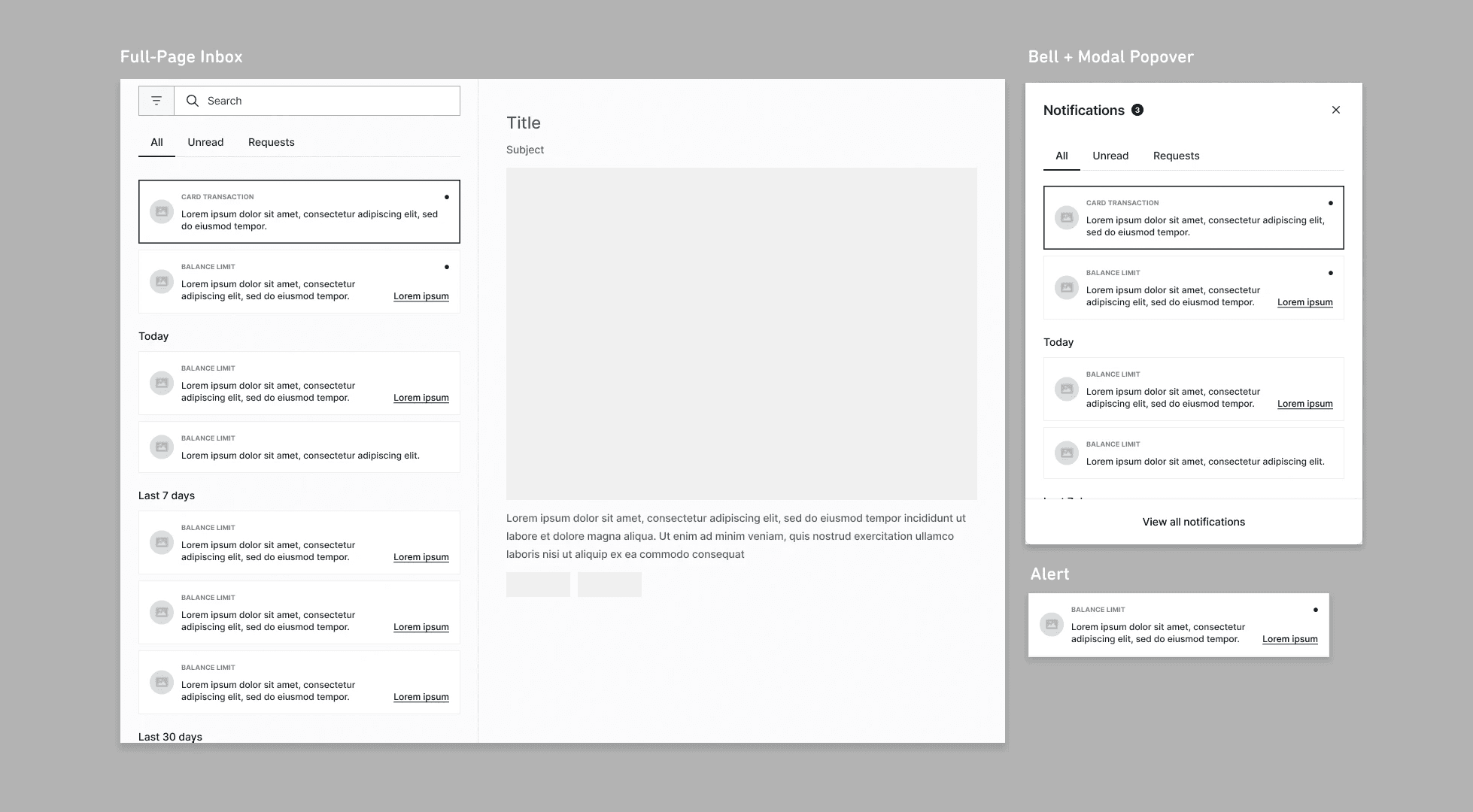
Our stakeholders and team concluded that an "Inbox" and "Popover" were the top contenders for our goals because they put alerts front-and-center for discoverability, and seamlessly fit within our existing system. As a result, I kept track of our design focus goals, then went into Figma to transform these ideas into mid-fi prototypes.

TESTING: STAKEHOLDER + PM FEEDBACK
Testing taught us users looked at alerts from top-to-bottom regardless of category, and a "Popover" had users dismiss as quickly as possible. "Inbox" proved to be have a longer time-on-task, allowed for more in-depth details, and supported an attentive experience with each alert.
Heading into the final stages, we tested the usability of the mid-fi prototypes with our stakeholders then synthesized their feedback onto a document. Testing taught us that the "Inbox" aligned more with our users' workflow needs to attentively address each alert, while the "Popover" was better for quick previews.
It was decided that the "Popover" design would be set aside for potential future integration, and our team was going to prioritize implementing the "Inbox" design. My team and I were on-track with the project, given my internship was wrapping up soon.
UX WRITING
In finance, ambiguity causes anxiety; we needed to ensure every alert had a clear resolution.
After researching how fintech competitors write their alerts, I applied strategies like "severity + cause + action" and te 12-Year-Old Rule, while communicating the urgency and clarity of the content. To also build user trust, I took precautionary effort to avoid writing errors that came across as "generic" and misleading. My proposals were then sent to stakeholders to review.
Contribution Highlights!
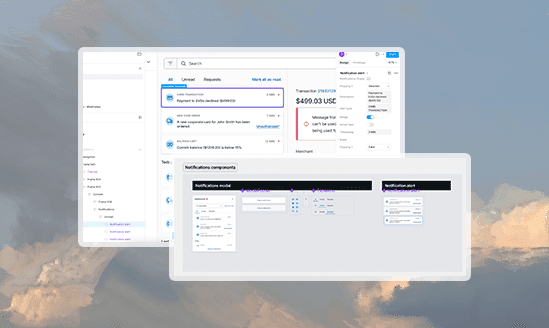
Designed responsive components with dynamic properties.
Reusable designs in different contexts to support long-term growth and ease tech implementation.
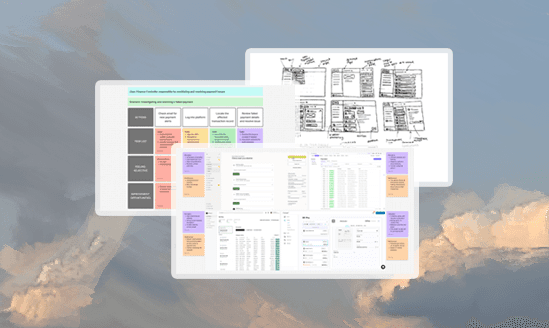
Constantly sourced UX research and ongoing feedback.
Validated design decisions and consolidated takeaways to inform every detail and future design plans.
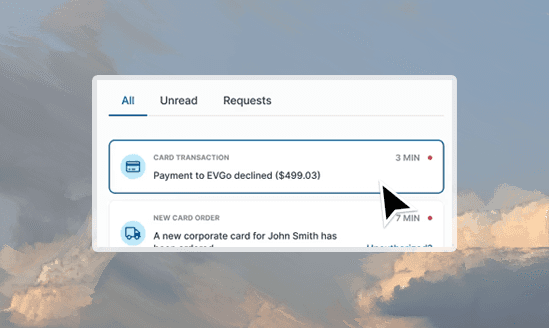
A system built for users now and in the future.
The system purposefully addresses current pain points and leaves room to continuously evolve in the future for our teams and userbase.